
ABOUT
The most effective psychotherapy takes place when you can truly connect with your therapist.
Moving through life, there are some people we vibe with more naturally than others; the same goes for the therapy setting. If you can connect with your therapist on a human level, if you can challenge and be challenged safely, if you can drop your guard in the presence of an empathetic other - you’ll expand in ways that’ll help you manage experience more freely and boldly.
Every treatment holds differences, roadblocks, and breakthroughs, and this profession calls on study, reflection, and adaptation so that the clinician can better meet the needs of the client. I believe that an impactful therapist attends as much or more therapy than that of his clients, and holds himself as accountable as any case he manages.
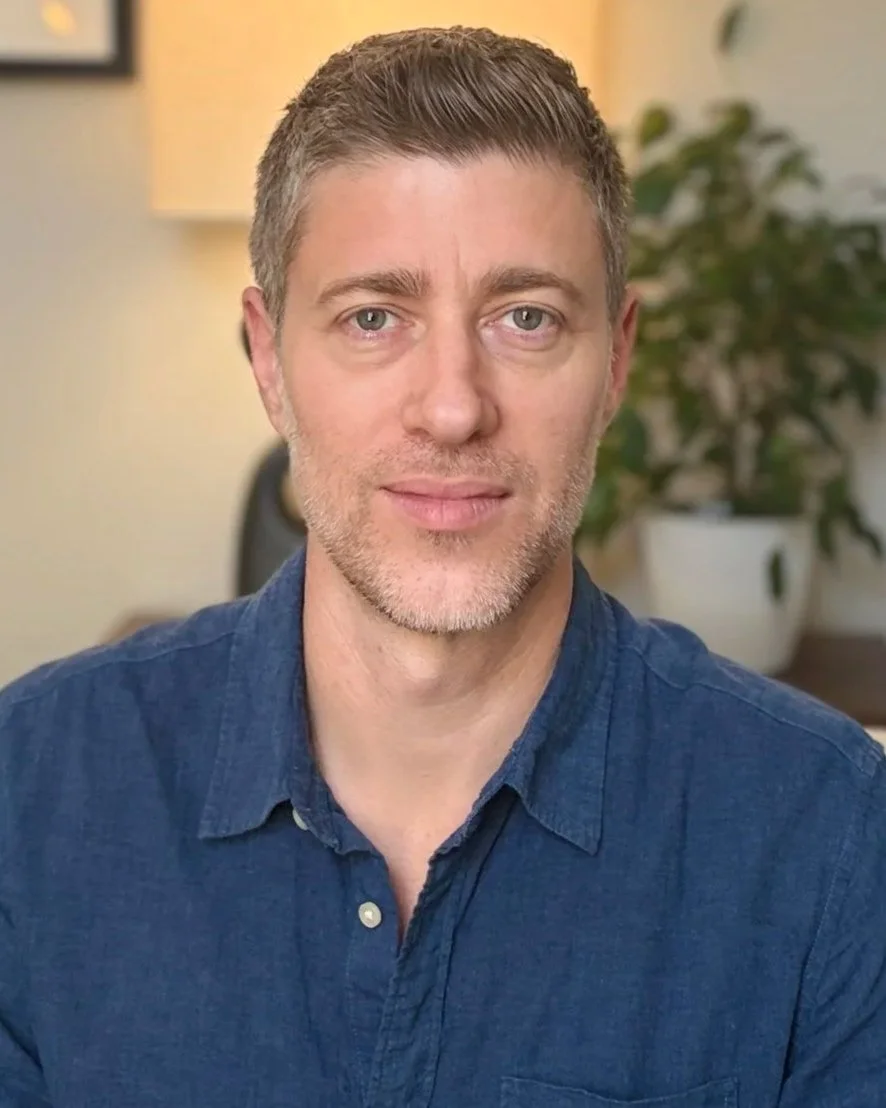
WHY I DO THIS WORK
Seeing the change.
Working with clients to help deepen their relationships to self and others is both fascinating and rewarding; it calls on creativity, intuition, and the willingness to sit in the unknown.
Helping people to identify and better recognize patterns that are affecting them negatively remains challenging and insightful throughout, giving the work its meaning and purpose.
Understanding where a pattern came from can give us more freedom in what happens next.
HOW I THINK ABOUT THERAPY
The past matters, but so does what is happening between us now.
My work is grounded in psychodynamic and attachment-based approaches. This means we may explore earlier relationships and experiences, not simply to understand the past, but to recognize how those experiences continue to shape the way you relate to yourself and others today.
I also pay close attention to what happens in the therapy room. The feelings, expectations, hesitations, and patterns that emerge between us can offer another way of understanding experiences that may be difficult to recognize elsewhere.
Insight matters. So does having a different experience.
Understanding a pattern can be important, but therapy can also give us an opportunity to experience something new within a relationship—being more direct, tolerating vulnerability, expressing anger or need, or discovering that you can be understood without having to carefully manage how you are perceived.
TRAINING AND BACKGROUND
My work is informed by ongoing study of relationships, attachment, and the ways our histories shape us.
I’m a Licensed Marriage and Family Therapist with a master’s degree in Clinical Psychology from Antioch University Los Angeles. My training has emphasized psychodynamic, attachment-based, and relational approaches to psychotherapy.
I have also completed Level 1 training in PACT (Psychobiological Approach to Couple Therapy), an approach that integrates attachment theory, developmental neuroscience, and attention to what happens between partners in real time.
LICENSURE & TRAINING
Licensed Marriage and Family Therapist
California & Colorado
M.A., Clinical Psychology
Antioch University Los Angeles
PACT Level 1
Psychobiological Approach to Couple Therapy
READY TO BEGIN
We can start with a conversation.
A consultation gives us a chance to talk briefly about what brings you to therapy, what you’re looking for, and whether working together feels like a good fit.